The Hilltop Creative Arts Foundation is known for her central role of nurturing creativity in youths across the country. How has being its member contributed to your growth as an artist, and what opportunities, or experiences have been most impactful for you?
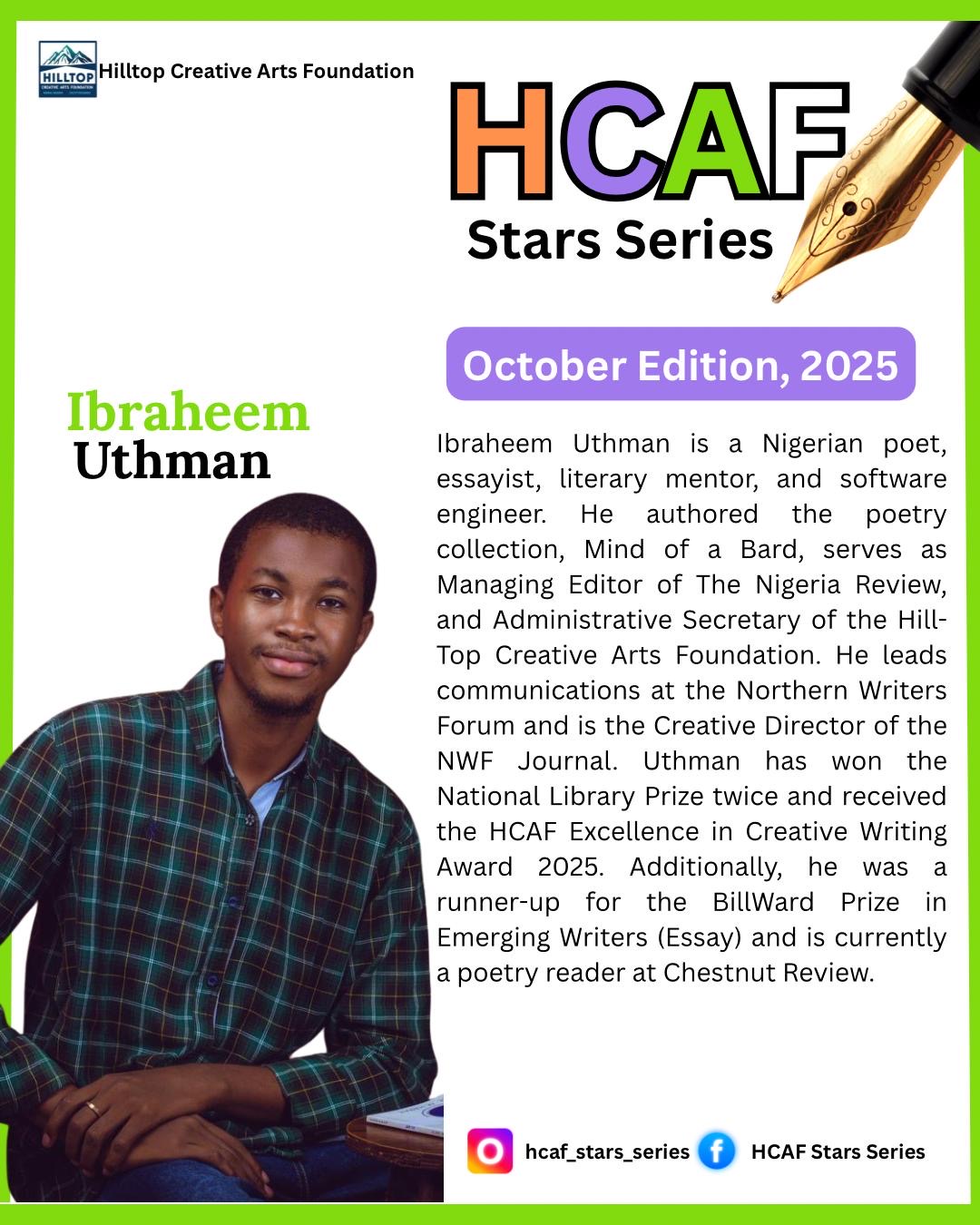
It’s hard to overstate the impact The Hill-Top Creative Arts Foundation (HCAF) has had on me. I joined as a regular member back in 2019, and the journey since then has been incredible, which led me to where I am today, serving as the Administrative Secretary of the foundation.
HCAF is indeed a special crucible for young talent. It’s a place where I was consistently exposed to a community that didn’t just tolerate but actively nurtured my artistic impulses. The most impactful experience has been the sheer volume of active and passive literary mentorship I’ve received and, now, getting to give back. Being thrust into roles like Managing Editor of The Nigeria Review and leading communications at the Northern Writers Forum all stemmed from the foundational opportunities HCAF provided. It wasn’t just about writing; it was about learning the ecosystem of literature, the administration, the publishing, the networking. It gave me a panoramic view of the creative world and taught me that art thrives in community and structure. And for now, none is like HCAF.
What themes and experiences push the creativity behind your work, and what part of the creative process poses a challenge to you?
The fuel for my work is ingrained in the human, yet ephemeral, experiences. My writing often gravitates toward longing and desire. Coupled with that is a persistent awareness of impermanence; the idea that everything is fleeting. This tension between wanting something intensely and knowing it won’t last constructs this melancholic (which doesn’t necessarily have to be) energy I try to capture.
The most challenging part of the creative process for me is the shift from the chaotic, inspired burst to the disciplined act of revising and structuring. I can generate ideas and initial drafts quickly, but sitting with a piece, honing the language, ensuring the emotional rhythm is consistent, and cutting away what is merely good to leave only what is necessary, that is exactly where the real work, and the real struggle, lies for me.
QUESTION. As a renowned creative, what advice would you give to emerging artists who are looking to balance the pursuit of artistic excellence with the desire for recognition and validation?
That’s a fantastic question, one I reflect on often, especially in my role as a literary mentor, even though I am still very much an emerging artist myself. My advice to emerging artists looking to balance artistic excellence with the desire for recognition and validation is this: Prioritize the work itself.
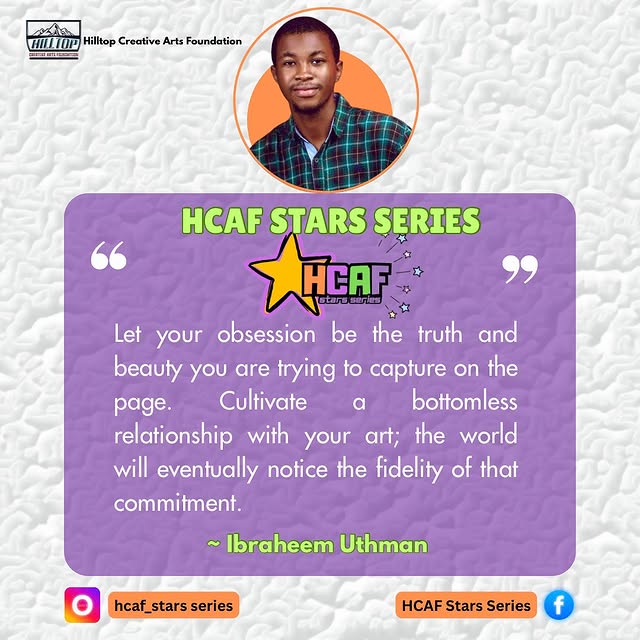
Recognition, like a shadow, follows the substance. When you focus solely on the quality of your craft, on making the next piece better than the last, on reading widely, and on being honest with your own work in a way that doesn’t disguise unpleasantness, you are pursuing the only thing you can truly control: excellence. The awards, the publishing credits, the validation… these are external variables. They are wonderful when they arrive, and I’ve been fortunate to receive a few, but they cannot be the primary purpose. Let your obsession be the truth and beauty you are trying to capture on the page. Cultivate a bottomless relationship with your art; the world will eventually notice the fidelity of that commitment.
What purpose fuels your creativity ?
The purpose that fuels my creativity is an almost non-negotiable need to articulate the ineffable. I write to process the world and, in doing so, to make a moment of connection with another human being.
It’s an effort to solidify feelings that are too large or too vague to simply exist as thoughts. When I write a poem or an essay, I am essentially creating a container for a complex, fleeting truth about desire, or grief, or the simple beauty of a broken thing. My creativity is a response to the inherent, beautiful difficulty of being alive. If one person reads my work and feels less alone in their own private longings, then the work has achieved its purpose.
Fifty years away from now, what do you want the literary world to perceive of your art?
Fifty years is a long way off. Honestly, I don’t really fancy being remembered. The focus on legacy can often pull you away from the work you need to do now. I’ve had a fair amount of recognition already, nationally and internationally, but much of that has been for my work in art administration and literary leadership, which is something I deeply value but never actively sought out.
If my work is to be perceived at all half a century from now, I hope it’s seen not as a monument to my person, but as a sincere artifact of a time and a consciousness. I’d want readers to feel the introspective pulse of the work, that it was literature that wrestled with the difficult questions of life without putting forth easy answers. A work that shows that a software engineer could also be a rigorous poet and a literary administrative force. I hope the literary world would see the art and the administration as two sides of the same coin: a disciplined approach to building and shaping a world, both on the page and in the community.
Is representation a priority for you, and do you see a need for your writing to reflect your background, or ancestral links?
Representation is a priority, yes, but perhaps not in the most obvious, direct sense. I don’t feel an obligation for my writing to be a literal mirror of my background or ancestral links in every single piece. However, as a Nigerian poet and essayist, everything I write is inherently filtered through my experience of that identity, that culture, and that geography. My language choices, my sense of community, my relationship with time; all of these are informed by my background. I see the need for my writing to reflect my background organically, through the authenticity of my voice, rather than through a forced checklist of cultural markers. I think the most effective representation comes when the work is simply true to the person who wrote it, and since my truth is inextricably linked to my ancestry, it will always be there, in the fabric of the art.
Thank you again for these wonderful and thought-provoking questions. It’s been a great conversation.
 Interview — Marvellous Mmesomachi Igwe